Creating a lower-toxic kitchen doesn’t mean replacing everything you own. This guide walks you through the kitchen swaps that matter most—from cookware and food storage to cutting boards and utensils—plus the materials and labels worth paying attention to.
If you’re trying to create a healthier home, the kitchen is one of the best places to start.
It’s also one of the easiest places to become overwhelmed.
Stainless steel or cast iron? Is nonstick really that bad? Do you need to throw away your plastic containers? And what exactly does “PFOA-free” mean when it’s printed across the front of a frying pan?
The good news is that you do not need to replace your entire kitchen.
A few thoughtful swaps—especially the things that regularly touch hot food—can make a meaningful difference. This guide will help you understand where to start, which materials I prefer, and which marketing claims deserve a closer look.
If you want to skip straight to the swaps, start with my 10 Non-Toxic Kitchen Swaps For A Healthier Home.
Not every kitchen item deserves the same level of concern.
I pay the most attention to items that:
That means cookware, food-storage containers, cutting boards, cooking utensils, and bakeware are usually a better place to focus than replacing every small appliance or kitchen accessory you own.
You don’t need to panic if you currently cook with nonstick pans.
Modern nonstick cookware is designed for normal cooking temperatures, but I still prefer to replace pans once the coating becomes scratched, chipped, peeling, or noticeably worn.
It’s also a good idea to avoid heating an empty nonstick pan over high heat.
If you’re ready to replace yours, stainless steel, cast iron, carbon steel, and some PFAS-free cookware options can all be good alternatives.
Related: Nonstick vs. Stainless Steel vs. Cast Iron: Which Cookware Is Best?
This is one of the simplest changes you can make without getting rid of every plastic item in your kitchen.
I don’t worry nearly as much about a plastic container holding crackers as I do about repeatedly heating food in plastic.
When possible, I use glass for:
If you already own plastic containers, you can continue using them for cool or dry foods and gradually replace them as they become scratched, cloudy, or warped.
Cutting boards and cooking utensils take a surprising amount of abuse.
Once plastic cutting boards develop deep grooves or plastic utensils become melted, chipped, or heavily scratched, that’s usually my cue to replace them.
Wood is one of my favorite alternatives for both.
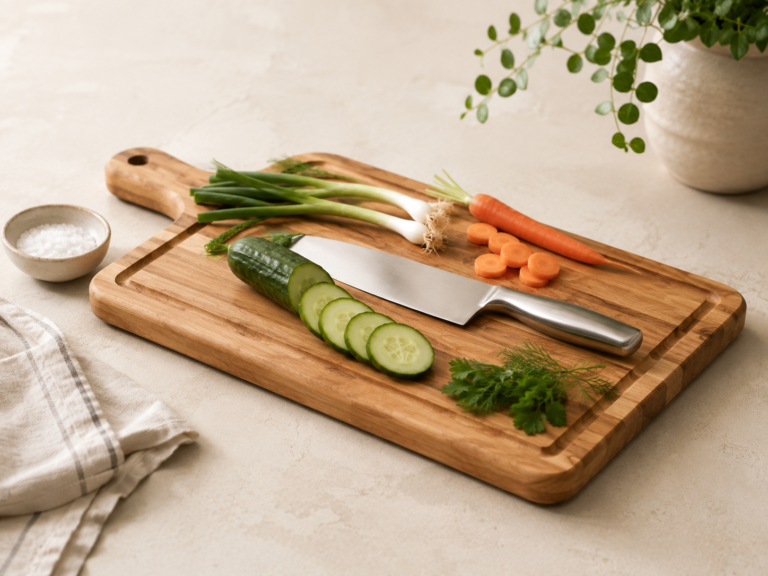
A good wooden cutting board can last for years when it’s washed by hand, allowed to dry thoroughly, and occasionally conditioned with a food-safe board oil.
That beautiful vintage bowl might look perfect on the kitchen shelf—but that doesn’t necessarily mean I would use it for tonight’s tomato soup.
Some older, handmade, or decorative ceramics may contain glazes that aren’t intended for regular food use.
If I don’t know the history of a vintage or decorative piece, I prefer to use it for decoration rather than food.
You don’t need one “perfect” cookware material.
Different materials are better for different jobs.
These are the ones you’ll see most often in my kitchen.
If you’re only replacing one pan, stainless steel is where I would start.
It’s durable, versatile, easy to maintain, and works especially well for:
There’s a small learning curve if you’re used to nonstick cookware, but proper preheating and a little cooking fat make a big difference.
And unlike coated cookware, a quality stainless-steel pan can last for decades.
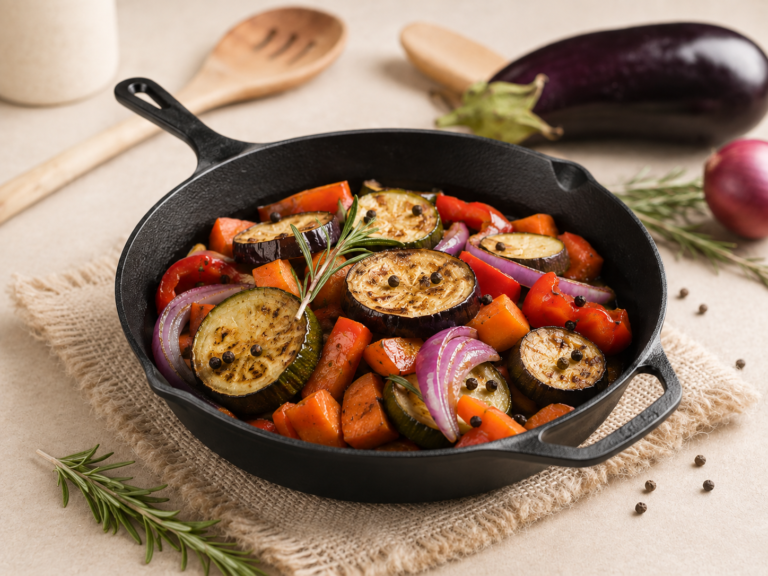
Cast iron is another kitchen workhorse.
It’s especially good for:
A well-seasoned cast-iron skillet becomes easier to cook with over time.
Bare cast iron can also transfer some iron into food, particularly when cooking moist or acidic foods, which is one reason I don’t use it for absolutely everything.
Enameled cast iron gives you many of the benefits of cast iron without requiring seasoning.
The enamel creates a barrier between the food and the iron, making it especially useful for:
It’s heavier—and usually more expensive—but a good Dutch oven can become one of the most-used pieces in your kitchen.
Glass is my favorite material for food storage.
It’s nonporous, doesn’t hold onto food odors easily, and makes it easy to see what’s hiding in the back of the refrigerator.
I especially like it for:
The biggest downsides are simply weight and breakage.
Carbon steel doesn’t get talked about nearly as much as stainless steel or cast iron, but it’s worth knowing about.
Think of it as something between the two.
It’s lighter than cast iron, handles high heat beautifully, and develops a naturally slick cooking surface as its seasoning builds.
It’s a great option for someone willing to do a little maintenance in exchange for excellent cooking performance.
Wooden spoons, spatulas, and cutting boards are some of the simplest swaps you can make.
They’re gentle on cookware, comfortable to use, and can last for years with basic care.
Just skip the dishwasher.
Hand-wash them, let them dry completely, and occasionally condition wooden boards when they begin looking dry.
Cookware packaging can make almost anything sound healthy.
Here’s the short version of a few labels you’re likely to see.
This isn’t as helpful as it sounds.
PFOA is one specific chemical historically associated with the manufacture of certain nonstick coatings. Seeing “PFOA-free” does not automatically mean PFAS-free.
If avoiding PFAS is important to you, look for a product that specifically states PFAS-free.
This is the more useful claim if your goal is to avoid fluorinated nonstick coatings.
Whenever possible, I still look beyond the front of the package and check the manufacturer’s actual materials information.
“Ceramic” cookware usually isn’t a solid ceramic pan.
Most ceramic nonstick cookware uses a coating applied over a metal base.
It can be a useful PFAS-free alternative for someone who still wants an easy-release cooking surface, but keep in mind that coated cookware generally won’t last as long as stainless steel or cast iron.
BPA-free tells you that the product doesn’t contain BPA.
It doesn’t tell you everything about the material itself, so I don’t use it as my only deciding factor when choosing food-storage products.
For foods I regularly heat or store long-term, I generally prefer glass when practical.
This is where things get frustrating.
“Non-toxic” sounds reassuring, but by itself it doesn’t tell you much about how a product was made or exactly what materials it contains.
That’s why I prefer brands that clearly disclose their materials rather than relying on a green label and a few leaves on the packaging.
Please don’t walk into your kitchen after reading this and start filling a trash bag.
You don’t need to replace everything at once.
Instead, I recommend replacing things as they wear out, starting with the items you use most often.
If I were starting from scratch, my priority list would look something like this:
1. Food storage
Gradually replace the containers you regularly use for hot food and reheating with glass.
2. Your most-used cookware
If your everyday frying pan is scratched or worn, that’s a logical next upgrade.
A quality stainless-steel skillet is a great place to start.
3. Cutting boards
Replace deeply worn plastic boards as they reach the end of their useful life.
4. Cooking utensils
Swap melted or damaged plastic utensils for wood or stainless steel.
5. Bakeware and specialty pieces
These can usually wait until they naturally need replacing.
Small changes add up.
You don’t need a Pinterest-perfect kitchen full of matching glass jars and brand-new cookware to create a healthier home.
Start with the items you use every day and build from there.
For a simple step-by-step list, read 10 Non-Toxic Kitchen Swaps For A Healthier Home.
No.
If your nonstick cookware is still in good condition, there’s no reason to throw everything away because you read an article about PFAS.
Avoid overheating it, don’t preheat it empty over high heat, and replace pans when the coating becomes significantly scratched, chipped, peeling, or worn.
If you want to move away from coated cookware, you can simply replace pieces gradually as they wear out.
No.
Plastic isn’t one single material, and not every plastic product carries the same considerations.
Rather than trying to eliminate every piece of plastic from your kitchen, I focus on reducing unnecessary heat exposure and replacing old, damaged food-contact plastics.
Glass and stainless steel are easy alternatives for many everyday uses.
For most kitchens, I would start with stainless steel.
It’s versatile, durable, works with acidic foods, and doesn’t require the seasoning and maintenance that comes with cast iron or carbon steel.
You can always add those later.
There’s no universal replacement schedule.
Coated cookware will eventually wear and should be replaced when the cooking surface becomes significantly damaged or deteriorated.
Materials such as stainless steel, cast iron, carbon steel, and glass can last for many years—or even decades—when properly cared for.
You don’t have to create a perfectly “non-toxic” kitchen.
You don’t have to throw away everything you already own.
And you definitely don’t have to spend hundreds of dollars overnight.
Start with what you use the most.
Replace things when they wear out.
And choose better materials whenever it’s time to buy something new.
That’s what making a lower-toxic home looks like in real life—small, practical changes that add up over time.