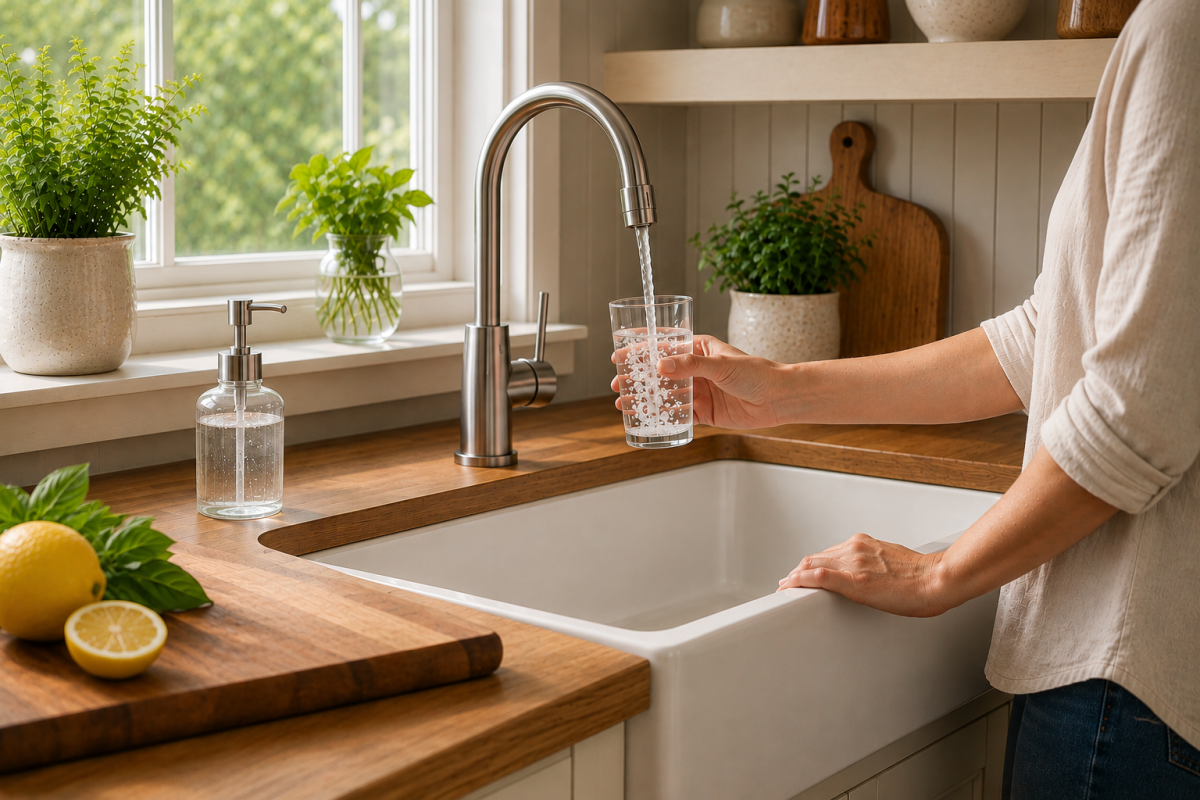
If you’ve started looking around your kitchen and wondering whether you need to replace everything, you can relax.
You don’t.
Creating a lower-toxin kitchen is much more about making thoughtful changes over time than tossing everything you own and starting over.
In fact, some of the best places to begin are the things that come into direct contact with your food — especially when heat is involved.
Start with one or two swaps that make sense for your family, use what you already have where it’s still working well, and replace other items as they wear out.
Want to take a deeper look at cookware, food storage, kitchen materials, and what to avoid? Read my complete Non-Toxic Kitchen Guide.
At a Glance: My Top Picks for a Healthier Kitchen
This article contains affiliate links. I may earn a commission if you buy through them — at no extra cost to you. As an Amazon Associate I earn from qualifying purchases.
If you just want to know what I would start with, these are some of my favorite practical kitchen swaps:
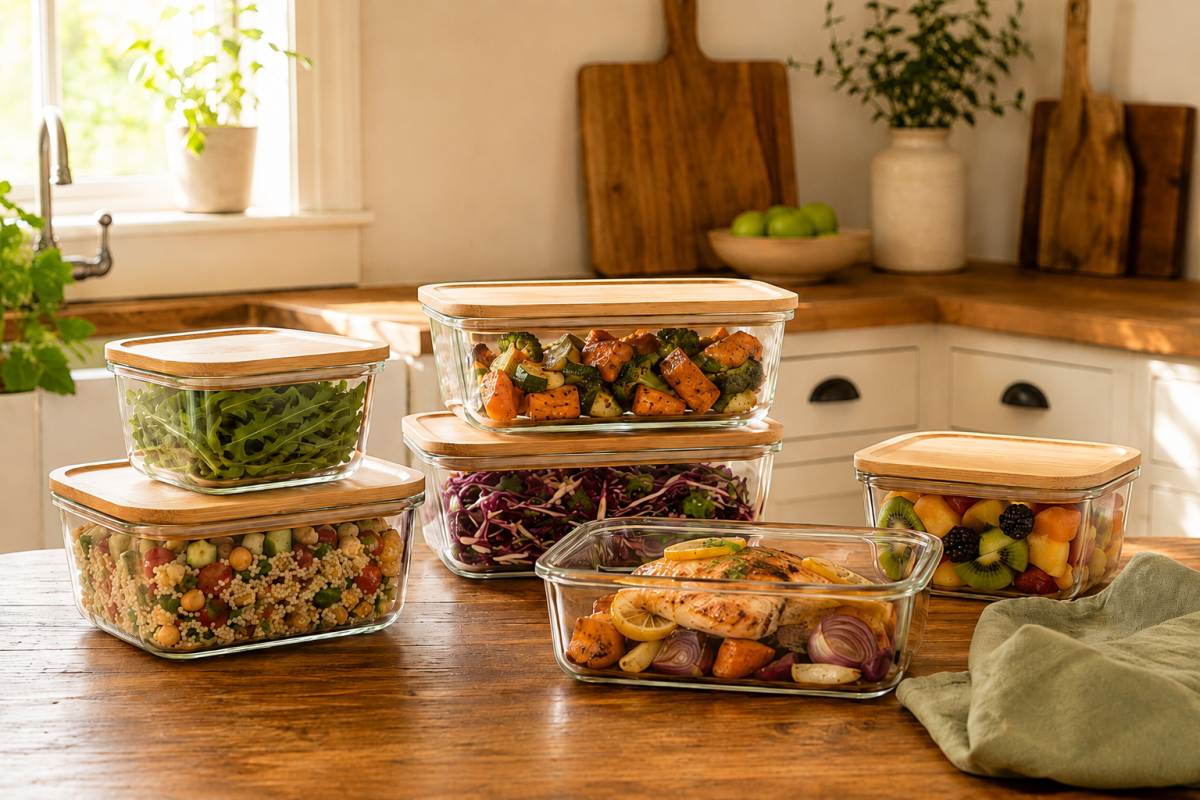
- Best overall first swap: Glass food storage containers — one of the easiest ways to reduce routine contact between hot food and plastic. Look for durable tempered-glass containers with secure lids.
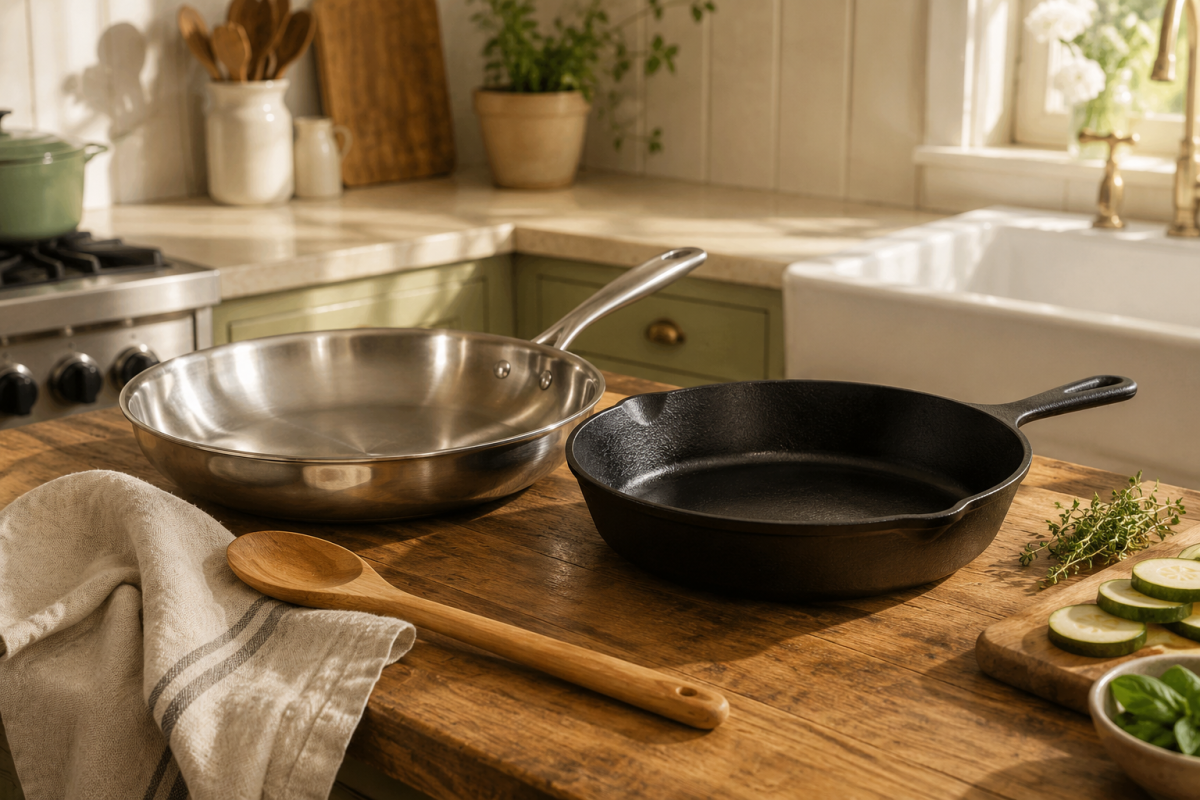
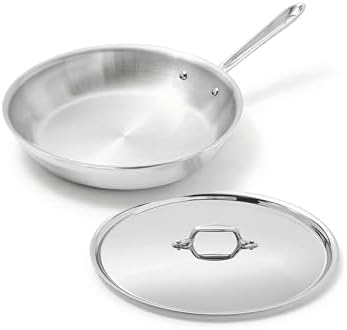
- Best stainless steel cookware upgrade: All-Clad D3 Stainless Steel Fry Pan — a durable, versatile option that can last for years and avoids a traditional nonstick coating.
- Best budget cookware swap: Lodge Cast Iron Skillet — affordable, incredibly durable, and made from simple materials without a synthetic nonstick coating.
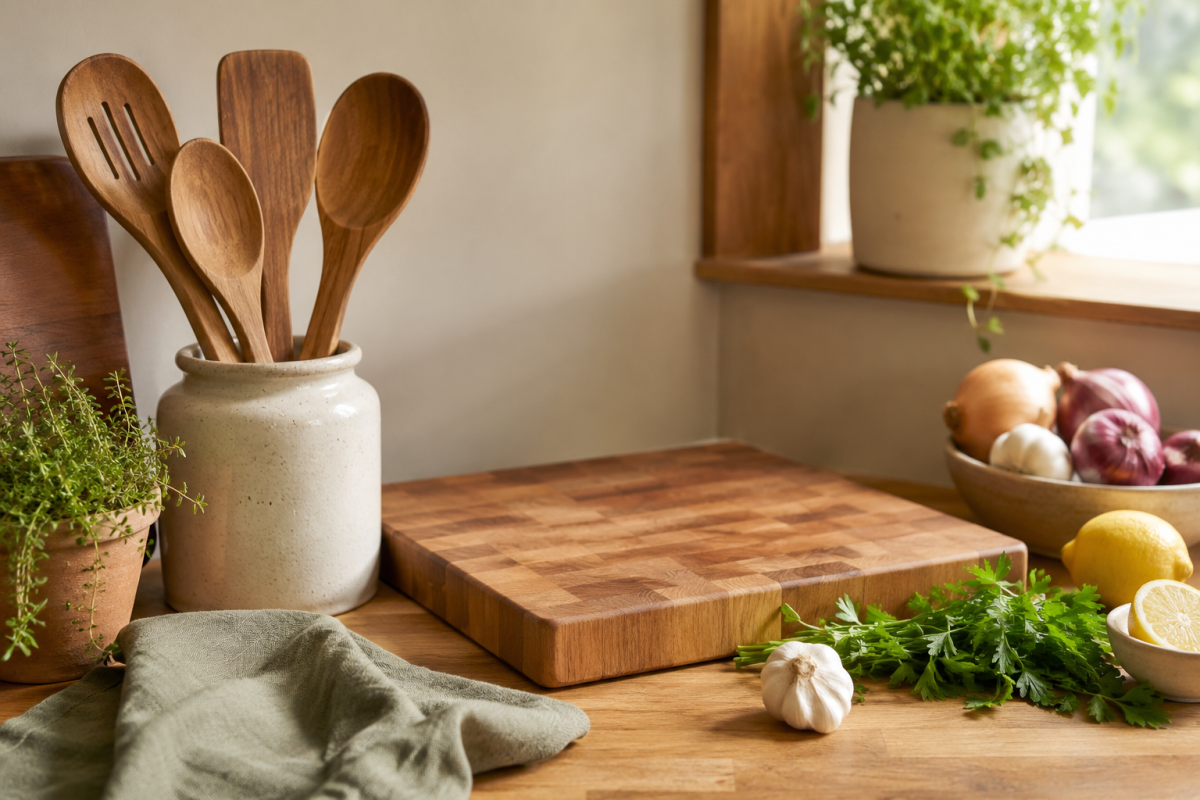
- Best easy utensil swap: Wooden cooking utensils — inexpensive, gentle on cookware, and a simple replacement for worn plastic spatulas and spoons.
- Best fragrance-free dish soap: Seventh Generation Free & Clear Dish Soap — fragrance-free, dye-free, and an easy everyday swap without a big price jump.
- Best water-filter upgrade: Waterdrop Under-Sink Filter — worth considering if its certifications match the contaminants found in your local water.
- Prefer to start without buying anything? Stop reheating food in plastic, open a window instead of using artificial fragrance, and simplify your everyday kitchen cleaner.
My biggest tip: You do not need to replace your entire kitchen at once. Start with the things that touch your food most often — especially items exposed to heat — and replace the rest gradually as they wear out.
10 Simple Kitchen Swaps to Make First
1. Swap Plastic Food Storage for Glass
If I were starting a lower-toxin kitchen from scratch, food storage would be one of my first swaps.
Plastic isn’t automatically unsafe, but heat, wear, scratches, and repeated use can increase the potential for chemicals or tiny plastic particles to migrate from some plastics into food. Glass gives you a simple way to reduce that contact — especially for hot foods and leftovers.
What I use instead
- Glass food-storage containers
- Glass mason jars
- Recycled glass jars (free & cheapest option!)
- Stainless steel lunch and snack containers
And you don’t have to throw away every plastic container you own. I would start by using glass for hot foods, reheating, acidic foods, and anything you store frequently.
Your older plastic containers can gradually be retired as they become scratched, cloudy, warped, or worn.
Another bonus: glass doesn’t absorb odors or tomato-sauce stains, and it’s much easier to see what’s hiding in the back of the refrigerator.
2. Replace Worn Nonstick Cookware with Stainless Steel or Cast Iron
Cookware can feel like one of the most intimidating kitchen swaps because there are so many materials and marketing claims.
I like to keep it simple.
For most everyday cooking, my first choices are:
- Stainless steel
- Cast iron
- Carbon steel
- Enameled cast iron
These materials can handle years of cooking without relying on a traditional nonstick coating.
Stainless steel is especially versatile, and a good skillet can last for decades. Cast iron is another affordable option and develops an increasingly easy-release surface when it is properly seasoned and cared for. Lodge’s seasoned cast iron, for example, is made without PFAS and seasoned with vegetable oil.
Do you need to throw away every nonstick pan?
No.
I would prioritize replacing older pans that are scratched, peeling, heavily worn, or no longer performing well.
When you’re ready to replace them, choose cookware designed to last rather than replacing inexpensive coated pans every few years.
3. Swap Plastic Cooking Utensils for Wood or Stainless Steel
Plastic spatulas and spoons sit directly against hot pans, sauces, and food — sometimes for years.
It’s an easy category to upgrade without spending much.
Better choices
- Solid wooden spoons
- Wooden or bamboo turners
- Stainless steel utensils
- High-quality food-grade silicone where flexibility is helpful
For everyday cooking, I especially like solid wood. It’s comfortable to use, doesn’t scratch cookware, and can last for years with basic care.
One small tip: rather than buying a huge matching utensil set, start with the three pieces you actually use — usually a spoon, slotted spoon, and turner.
4. Replace Worn Plastic Cutting Boards
You don’t necessarily need to replace a newer plastic cutting board just because it’s plastic.
The point where I start reconsidering one is when the surface becomes deeply scored, rough, or difficult to clean.
What I prefer
- Solid hardwood
- Maple
- Walnut
- Beech
- Quality bamboo boards
Wood does require a little care — mostly hand washing, drying promptly, and occasionally applying food-grade board oil — but a good wooden cutting board can last for years.
And honestly, I think they look much nicer sitting on the counter too.
5. Choose a Fragrance-Free Dish Soap
Dish soap is one of those products we use constantly without thinking much about it.
You don’t need an ingredient list a mile long to wash dishes effectively.
When possible, I look for:
- Fragrance-free formulas
- No added dyes
- Clearly disclosed ingredients
- EPA Safer Choice certification when available
EPA’s Safer Choice program reviews ingredients against human-health and environmental criteria, and some qualifying products receive an additional Fragrance-Free Safer Choice designation.
This is also one of the cheapest swaps on this list, which makes it a really easy place to start.
6. Skip Artificial Kitchen Fragrances
A clean kitchen doesn’t need to smell like “Tropical Sunrise” or “Vanilla Cookie Explosion.”
Fragrance products can add more substances to indoor air when what we’re usually trying to do is simply remove an odor.
Instead of covering smells up, I prefer to deal with the source.
Try this instead
- Open a window when weather allows
- Run your range hood while cooking
- Take food scraps and trash out regularly
- Keep baking soda near odor-prone areas
- Simmer citrus peels, herbs, or cinnamon occasionally
Usually, better ventilation and removing whatever is causing the smell works better than layering fragrance over it.
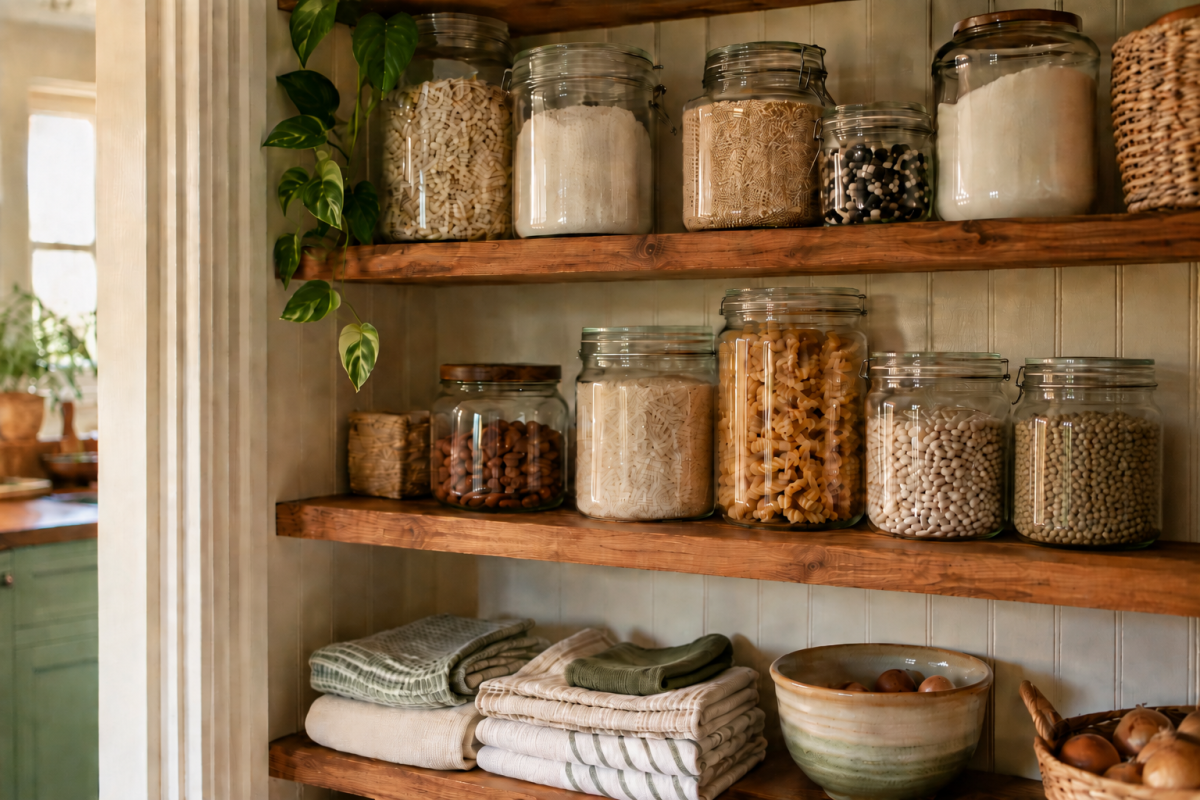
7. Store Pantry Staples in Glass
This swap isn’t one I would rush to do overnight.
But as pantry containers need replacing, glass jars are one of my favorite upgrades.
I use them for things like:
- Oats
- Rice
- Pasta
- Beans
- Flour
- Nuts and seeds
- Granola
- Baking ingredients
Beyond reducing unnecessary plastic contact, glass makes it much easier to see what you have.
That means fewer mystery bags hiding behind the flour — and hopefully less food waste.
You don’t have to buy a matching Pinterest-worthy pantry system either. Mason jars and repurposed glass jars work perfectly well.
8. Replace Disposable Paper Towels with Reusable Cloths — When It Makes Sense
I still think paper towels have a place in the kitchen, especially for particularly messy or potentially contaminated cleanups.
But they don’t have to handle every drip of water and crumb.
Keep a stack of washable kitchen cloths or cotton towels nearby for:
- Drying hands
- Wiping counters
- Cleaning spills
- Drying produce
- Everyday cleanup
It’s one of those swaps that saves money over time while reducing waste.
Just toss used cloths into the wash regularly rather than leaving damp towels sitting around.
9. Choose a Water Filter Based on What’s Actually in Your Water
This is one area where I wouldn’t recommend simply buying whichever filter has the prettiest marketing.
Different filters remove different contaminants.
Before spending hundreds of dollars, check your local water-quality report — and if you have specific concerns, consider testing your water.
Then look for filtration that is independently certified for the contaminants you actually want to reduce.
Depending on your water, options might include:
- Filter pitchers
- Faucet-mounted filters
- Countertop systems
- Under-sink filters
- Reverse-osmosis systems
- Whole-home filtration
For example, some under-sink systems carry certifications for reduction of contaminants such as lead or PFAS, but the specific certification matters more than simply seeing the words “clean water” on the box.
The goal isn’t necessarily to buy the most expensive filter.
It’s to buy the right filter for your water.
10. Simplify Your Everyday Kitchen Cleaner
You don’t need a cabinet full of heavily fragranced sprays for everyday crumbs, fingerprints, and cooking messes.
For routine cleaning, I like keeping things very simple.
Simple Everyday Kitchen Spray
You’ll need:
Add the water and soap to your bottle and gently swirl to combine.
That’s it.
Use it for routine cleaning on appropriate sealed surfaces, then wipe with a clean cloth.
What about vinegar?
I keep vinegar separate rather than mixing it with Castile soap. Because vinegar is acidic and Castile soap is alkaline, combining them can interfere with the soap’s cleaning action.
Diluted vinegar can be useful for certain mineral deposits and other cleaning jobs, but never use vinegar on natural stone such as marble, limestone, or some granite surfaces.
And remember: cleaning and disinfecting aren’t the same thing. After raw poultry, certain illnesses, or other situations where disinfection is needed, use a disinfectant appropriate for the job and follow the label directions.
My Favorite Non-Toxic Kitchen Swaps
If you’re ready to replace something in your kitchen, these are the kinds of products I’d look at first.
I’m not suggesting that you need every item on this list. I prefer to replace things gradually — usually when something is worn out, damaged, or no longer working well.
Glass Food Storage Containers
Glass food storage is one of my favorite first swaps because it’s useful every single day.
I especially like glass for leftovers, meal prep, acidic foods, and anything that may go from the refrigerator to the microwave.
What I look for:
- Tempered glass
- Secure, replaceable lids
- Dishwasher-safe containers
- A range of practical sizes
A good option: Pyrex Freshlock Glass Storage Containers
These are a practical choice for everyday leftovers and meal prep. I prefer removing the plastic lid before reheating food.
Best for: anyone who wants an easy first kitchen swap without changing how they cook.
Stainless Steel Cookware
A good stainless steel skillet is one of those purchases that can stay in your kitchen for years.
Unlike traditional nonstick cookware, stainless steel doesn’t rely on a coated cooking surface. It does take a little practice, but once you learn how to preheat the pan and use the right amount of cooking fat, it’s incredibly versatile.
What I look for:
- Fully clad construction
- Stainless steel cooking surface
- Comfortable handle
- Oven-safe design
A good option: All-Clad D3 Stainless Steel Fry Pan
It’s definitely more of an investment, but it’s the kind of pan I’d choose if I wanted one dependable stainless skillet to use for years.
Best for: frequent cooks who want durable, long-lasting cookware.
Cast Iron for a More Affordable Cookware Swap
If stainless steel feels too expensive, cast iron is one of the best-value cookware upgrades you can make.
It works beautifully for searing, roasting, stovetop cooking, and oven recipes, and a well-cared-for skillet can last for generations.
A good option: Lodge Cast Iron Skillet
Lodge is widely available, affordable, and comes pre-seasoned, so you can start using it right away.
Best for: anyone looking to replace worn nonstick cookware without spending a lot.
Wooden Cooking Utensils
This is one of the simplest swaps on the list.
If your plastic spatulas and spoons are scratched, melted, or looking a little rough, replacing them with a few good wooden utensils is inexpensive and easy.
What I look for:
- Solid wood rather than glued-together pieces when possible
- Smooth finish
- No painted cooking surfaces
- Simple shapes you’ll actually use
A good option: OXO Wooden Cooking Utensils
You really don’t need a huge utensil set. A spoon, slotted spoon, and turner will cover most everyday cooking.
Best for: anyone who wants a low-cost kitchen upgrade.
Fragrance-Free Dish Soap
Dish soap is one of those products you use constantly, so it’s an easy place to simplify ingredients without changing your routine.
I generally prefer fragrance-free formulas with no added dyes and clear ingredient disclosure.
A good option: Seventh Generation Free & Clear Dish Soap
It’s affordable, easy to find, and a simple choice if you want to avoid added fragrance.
Best for: households looking for an inexpensive everyday swap.
Water Filtration
Water filters are a little different from the other products on this list because there isn’t one system that’s best for everyone.
The right filter depends on what’s actually in your water.
Before buying one, I recommend checking your local water-quality report or having your water tested if you have specific concerns. Then look for independent certifications that match the contaminants you want to reduce.
A good option to consider: Waterdrop Under Sink Filter
SHOP WATERDROP TSU 0.01 MICRON ULTRA FILTRATION UNDER SINK WATER FILTER SYSTEM
An under-sink system can be convenient because it gives you filtered water directly from the faucet without taking up counter space.
Best for: households that know which contaminants they want to target and want a more permanent filtration option.
Which Kitchen Swaps Should You Make First?
If I were making these changes gradually, I wouldn’t start by filling an online cart.
I’d look around the kitchen and ask:
What do I use the most? What gets hot? What touches my food every day? And what already needs replacing?
For most people, that means starting with:
- Worn nonstick cookware
- Plastic containers used for reheating
- Damaged plastic utensils
- Fragranced dish soap
- A water filter, if your water quality calls for one
That approach keeps the process practical — and prevents “non-toxic living” from turning into an expensive kitchen makeover.
You don’t need more stuff. You just want better choices when it’s time to replace what you already use.
Frequently Asked Questions
Is all plastic in the kitchen toxic?
No.
“Plastic” covers many different materials, and their properties aren’t all the same. Rather than becoming afraid of every piece of plastic in your kitchen, focus on practical ways to reduce unnecessary exposure.
Avoid repeatedly heating food in worn plastic, replace badly scratched or damaged containers, and use glass or stainless steel when it’s practical.
What’s the best first non-toxic kitchen swap?
For most families, I would start with glass food storage or a frequently used piece of cookware.
Both come into direct contact with your food, they’re used constantly, and you don’t need to replace your entire kitchen to make a meaningful change.
Is stainless steel better than nonstick cookware?
They’re different tools, but stainless steel has one major advantage: there is no nonstick coating to wear away.
It does take a little practice. Preheating the pan correctly and using enough cooking fat makes a huge difference.
Once you get the hang of it, stainless steel is incredibly versatile.
Is cast iron hard to care for?
Not nearly as hard as its reputation suggests.
For most seasoned cast iron, wash it, dry it thoroughly, and apply a very light coating of oil when needed.
Avoid soaking it in water or putting it in the dishwasher.
Do I need a water filter?
Not necessarily.
Start by looking at your local water-quality report. The contaminants present — and the concentrations involved — should guide whether you need additional filtration and what type makes sense.
A Healthier Kitchen, One Swap at a Time
A lower-toxin kitchen doesn’t come from replacing everything you own with a product labeled “clean.”
It comes from paying a little more attention to what touches your food, what gets heated, what you breathe, and what you use every single day.
Start with the swaps that matter most for your household.
Replace things when they wear out.
Keep the products that are still serving you well.
And don’t let the pursuit of a healthier home become another source of stress.
Small changes really do add up.
Ready to keep going? Head over to my Non-Toxic Kitchen Guide for a deeper look at cookware, kitchen materials, food storage, and the swaps worth making first.